
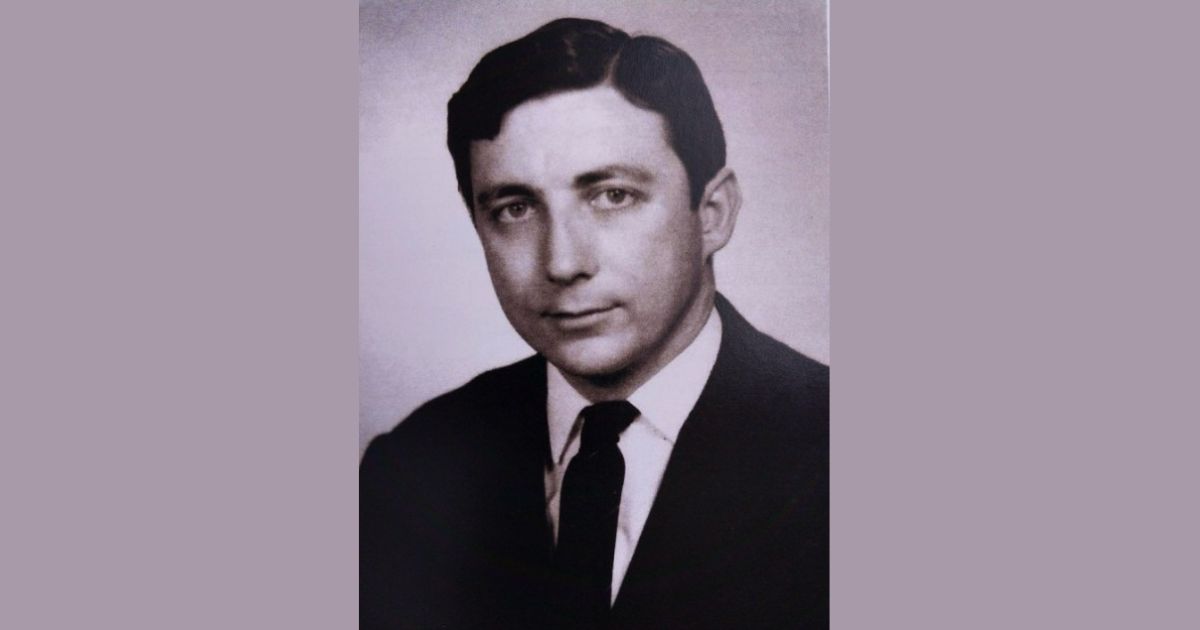
In a life defined by curiosity and quiet persistence, Dr Graham Grant AO (Fr 1951) bridged engineering and medicine to create equipment that has safeguarded patients for generations. From Sydney’s North Shore to the hospital corridors of London, his story is one of disciplined craft, creative grit, and unwavering care for the smallest lives.
Graham grew up in a family of innovators and problem-solvers, both his father and grandfather were civil engineers, and followed their path into Engineering at the University of Sydney. In 1956, his final year, he found himself pulled toward medicine’s practical frontiers. He wrote his thesis on Medical Apparatus, noticing that many clinical devices of the era emerged from informal arrangements between doctors and tradespeople, without the benefit of rigorous engineering standards. Two outliers, the DeBakey heart–lung machine and the Kolff artificial kidney, proved what excellence could look like. After graduating with a Bachelor of Engineering (Mechanical & Electrical), Graham resolved to bring that level of professional precision to medicine.
He joined Commonwealth Industrial Gases (CIG) as Assistant Manager of the Medical Section, working on anaesthetic systems and, crucially, learning where innovation really lives: in the clinical detail only doctors routinely see. Determined to gain full clinical access he made a radical choice — he would study medicine. Despite doubts and warnings from family about finances, he pressed on, enrolling in Medicine I at Sydney in 1958 while working full-time and studying at night in the Maclaurin Room. In a famously competitive first year (650 students, roughly 250 progressing), he passed — including a practical exam requiring the exposure of a frog’s brain by dissection.
Keen to broaden his horizons, Graham resigned from CIG in 1960 and sailed to London to apply in person to medical schools. St Mary’s Hospital Medical School handed him a blank sheet of paper with the prompt: “The value of an education at an English university to an Australian.” He wrote about overcrowding back home and the chance to deepen his experience, then faced a semicircle of consultants and questions ranging from space travel to human purpose. A few days later, he was accepted into the second Bachelor of Medicine course. He supported himself as a development engineer at British Oxygen Company, played jazz in an East End pub (thawing his hands by the fire before each set), and lodged above two grand pianos owned by a music publisher who offered him a spare room. He earnt his second degree in a Bachelor of Medicine, earned fee support from a college trust, and completed his MBBS (London) in 1967, later training in anaesthetics at St Charles Hospital, Ladbroke Grove.
It was during these London years that his most celebrated innovation emerged – a portable infant incubator designed specifically for ambulances, inspired by the winter reality of newborns transported at night without safe warming. Using an ellipsoid shell, double-wall insulation, carefully controlled airflow, and minimal power draw, he engineered a device that was safe, portable and practical. After patenting the concept, he worked with Oxygenaire to manufacture it. When Oxygenaire opened its new factory in Basingstoke in October 1964, a prototype of Graham’s incubator was presented to HRH Princess Alexandra, a public acknowledgement of an invention that directly saved lives.
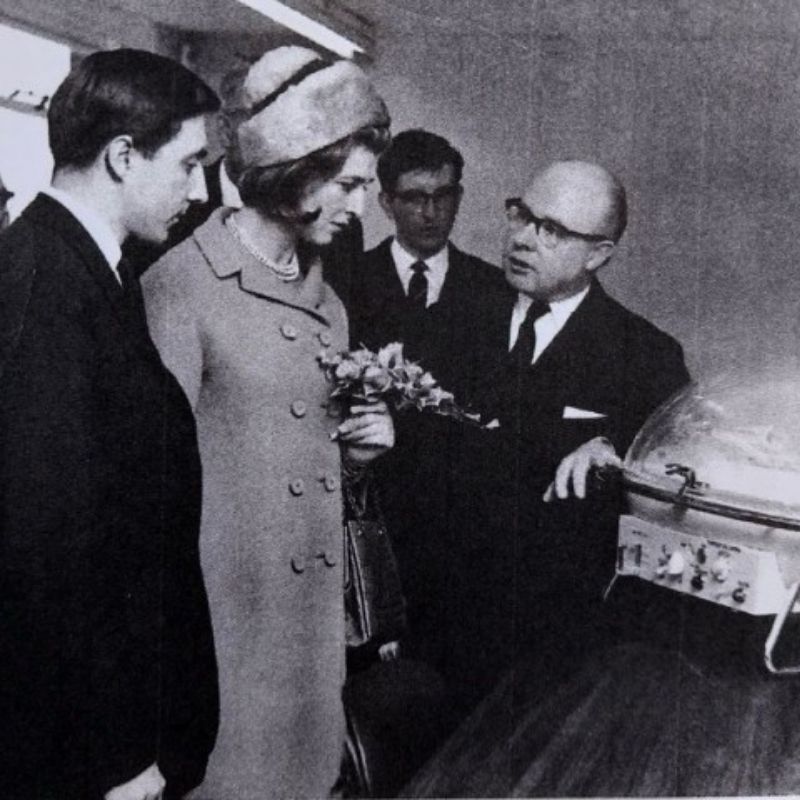
Dr Grant presenting gis portable incubator to HRH Princess Alexandra in 1964.
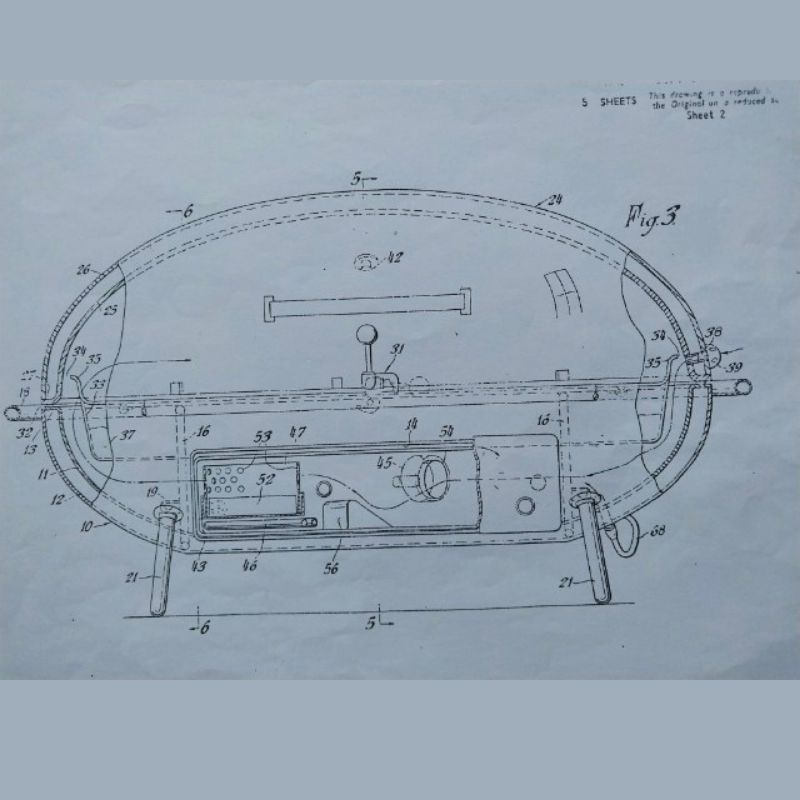
The design of the portable incubator.
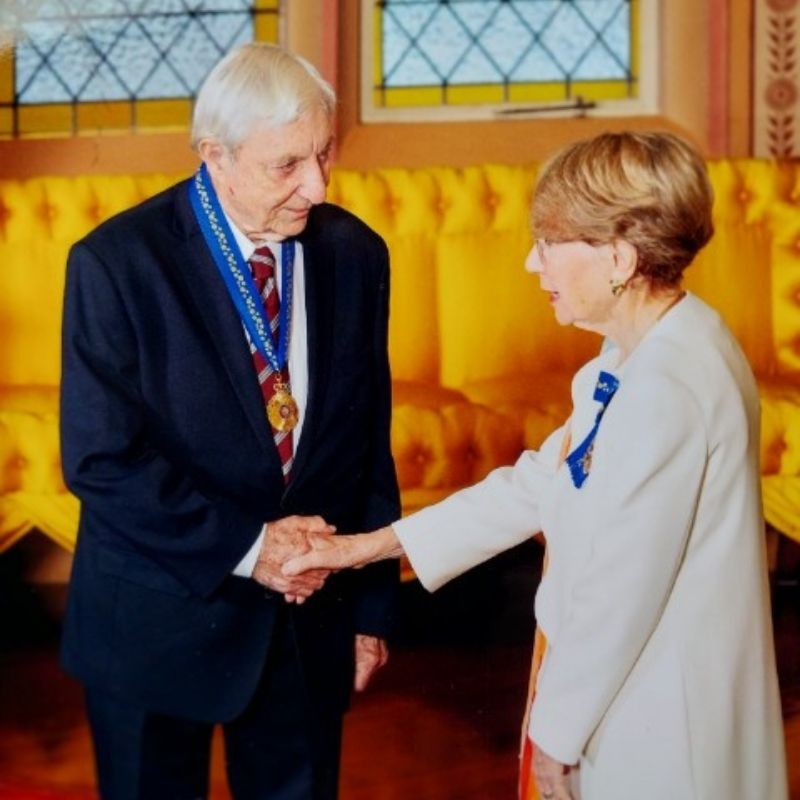
Dr Grant awarded an Officer of the Order of Australia (AO) in 2023.
Across his career he continued to solve problems at the point of care, co-developing the ventilation meter later manufactured as “Spiroflo,” producing disposable oxygen mask prototypes, creating a medical humidifier that precisely stabilised temperature and humidity during anaesthesia, and working on new forms of paediatric ventilators, laryngoscopes and anaesthesia ventilators. Many of his designs earned global acclaim for their simplicity and inherent safety, even when commercial decisions later shut production despite ongoing demand. Through all of this, he learned to fiercely protect his work, patent his ideas, and keep building even when the industry hesitated.
College remained a constant. Graham spent six happy years at St Andrew’s and, in 1975, returned to marry artist and academic Lyn Wood in the Chapel, arriving in a 1920s Rolls-Royce. Graham met Lyn whilst he was a resident at St Andrew’s, at a farewell party for a mutual friend. Lyn, a resident tutor at The Women’s College, studying her Masters of Art in renaissance art, shared Graham’s sensitivity for the creative process. Their family, including internationally commissioned orchestral composer daughter Alicia, grew alongside Graham’s hospital practice as a Visiting Medical Officer in public and private settings for three decades. Music, too, never left: he wrote songs for the 1959 SRC Revue Dead Centre, played jazz standards from the 1920s–50s, and saw creativity as kin to clinical innovation.
In January 2023, his lifetime of innovation and contribution was recognised with his appointment as an Officer of the Order of Australia (AO) — formal acknowledgement of a career that raised the standard of care in theatres, ambulances and neonatal units around the world.
Looking back, he credits St Andrew’s with belonging and momentum — a community that emboldened him to take risks, whether sailing to London with a half-skeleton for anatomy study, sketching a Sydney rail map in the style of London’s, or building prototypes in a small workshop after hours and going to jazz gigs. Looking forward, that same quiet drive remains. His message to current Androvians echoes a life well-lived: don’t wait for perfect conditions or institutional permission. Start where the need is clear, learn what the problem demands, and build with care.