

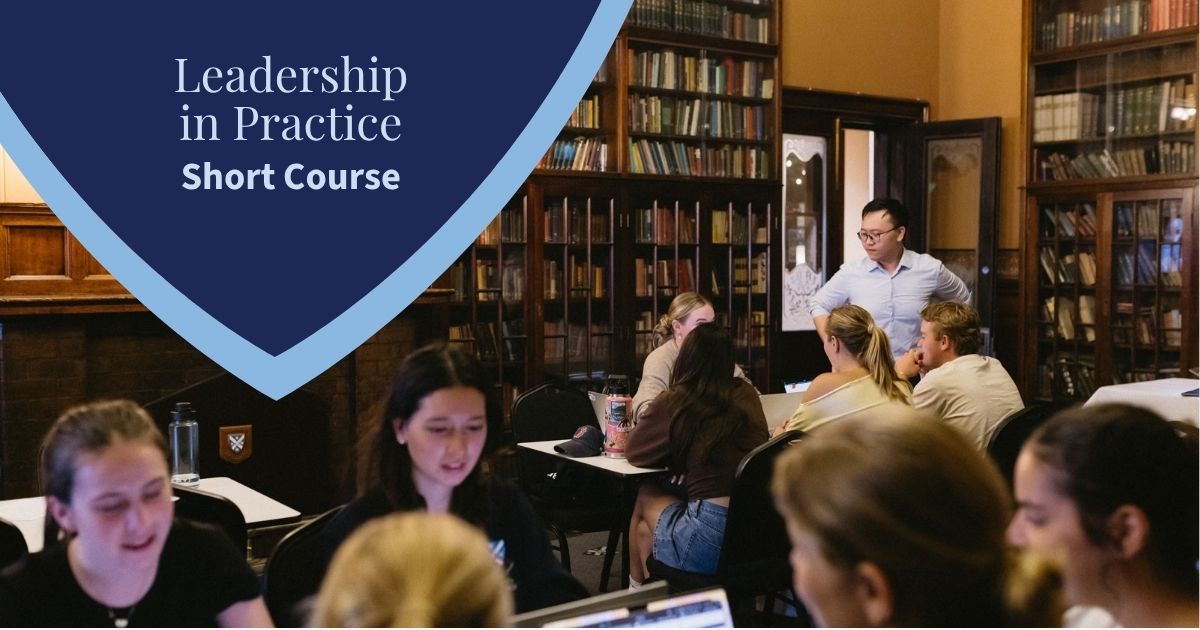
Skills that set Androvians Apart | Leadership in Practice
Leadership is not something you can learn from a textbook alone. It develops through experience, reflection and the opportunity to respond when the path ahead is not always clear.
At St Andrew’s, students can develop these capabilities alongside their university studies through the College’s program of Short Courses designed to build practical skills for life beyond their degree.
Leadership in Practice is a six-week course that puts students into realistic situations through hands-on simulations, practical cases and real-time decision-making.
Ryan Cheng, a Doctoral Candidate at the University of Sydney and Head of Business at St Andrew’s College, facilitates the course which explores self-leadership, judgement under pressure, team communications, influence, strategy and negotiation. Rather than simply discussing leadership concepts, students are challenged to apply them.
The course uses interactive simulation cases from Harvard Business School and the Northwestern Kellogg Dispute Resolution Research Centre. These include Everest V3, which explores group dynamics and leadership through a simulated Mount Everest expedition, and a Food Truck Challenge, which asks students to make entrepreneurial decisions as market conditions change.
For Charlie Hansen (Fr 2026), who participated in the course, learning through experience was one of its greatest strengths. The immersive simulations created a space to test different approaches, learn from mistakes and reconsider how to respond in challenging situations, something he felt a textbook could not replicate.
Learning from different perspectives
Leadership in Practice also brings together students studying different degrees and with different experiences, creating an opportunity to see how people approach the same situation in different ways.
This diversity was particularly valuable for Charlie, who found that students brought different perspectives and reached different conclusions based on their studies, College experiences, home lives and personal choices.
Through simulations and discussions, students saw how their peers approached challenges and applied their own experiences to unfamiliar situations.
This is an important part of the course, developing an understanding that effective leadership is not about following one prescribed style. It involves listening, adapting, understanding the situation and knowing when to act.
Skills that extend beyond the course
In Charlie’s opinion, the course has influenced his everyday interactions. He found that the experience reinforced the importance of listening carefully and understanding a situation before acting, particularly when managing risk or navigating a difficult situation.
It also gave him greater confidence in challenging or high-pressure situations, while reinforcing the importance of consistency and setting an example for others.
These capabilities extend well beyond university. Effective communication, active listening, thoughtful reasoning and the ability to work with others are valuable across disciplines and future careers.
The combination of practical experience and reflection has contributed to Charlie’s personal and professional development, particularly through a greater understanding of how communication, listening, and negotiation can shape an outcome.
Learning beyond the degree
Leadership in Practice is part of a broader program of short courses offered at St Andrew’s that complements students’ university education with opportunities for personal and professional development.
The course gives students space to explore skills and ideas that may sit outside their formal degree while learning alongside peers from across College.
For Charlie, this opportunity to develop skills beyond his studies is an important part of the St Andrew’s experience. He sees these opportunities as a way for students to develop and refine character-building skills alongside their academic capabilities.
Through experiences such as Leadership in Practice, students are encouraged to develop not only what they know, but how they communicate, collaborate, respond to challenges and lead.
These skills help Androvians take what they have learned at university and apply it with confidence to the opportunities and challenges that follow.
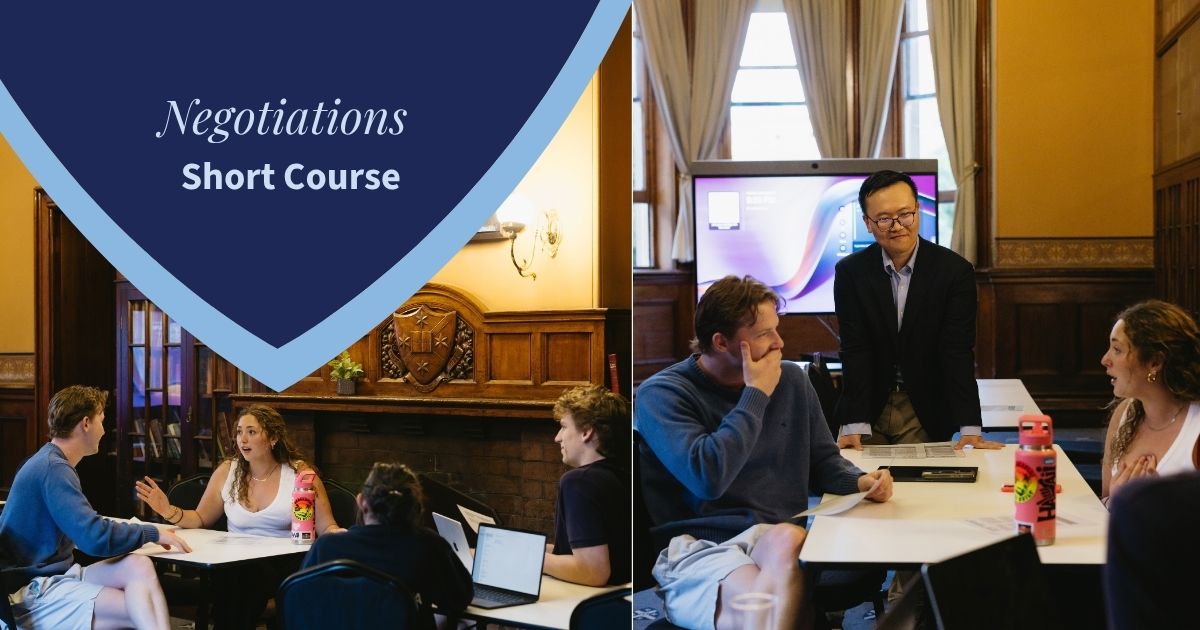
Discover the other Short Courses St Andrew’s College offers throughout the year.
Read about the Negotiations Short Course